
Colonoscopy Prep: What You Can and Can’t Eat Before Your Procedure
What does colonoscopy prep involve exactly? It is the process of emptying your bowel in the
few days leading up to your procedure, using a specific diet and a prescribed bowel cleansing
solution. This ensures your specialist has a clear view during the procedure.
Here is what colonoscopy prep generally covers, including tips to optimise the result.
What Does Colonoscopy Prep Involve?
Most bowel prep follows the same general pattern, though the exact product and timing will
depend on what your specialist prescribes. In the days beforehand, you will usually be asked to
switch to a low fibre diet, before moving to clear fluids only the day before your procedure,
alongside a bowel cleansing solution that clears everything out so the lining of your bowel is
fully visible.
How Long Does the Process Take?
Most people start adjusting their diet around two to three days before the procedure, moving to
low fibre foods before switching entirely to clear fluids the day before. The bowel cleansing
solution itself is usually taken the evening before, the morning of, or split across both,
depending on your specialist’s instructions and the time of your appointment. All up, most
people find the process takes a full day of planning around meals and bathroom access, so it is
worth keeping that day fairly free of other commitments.
Colonoscopy Prep Diet: Foods to Eat
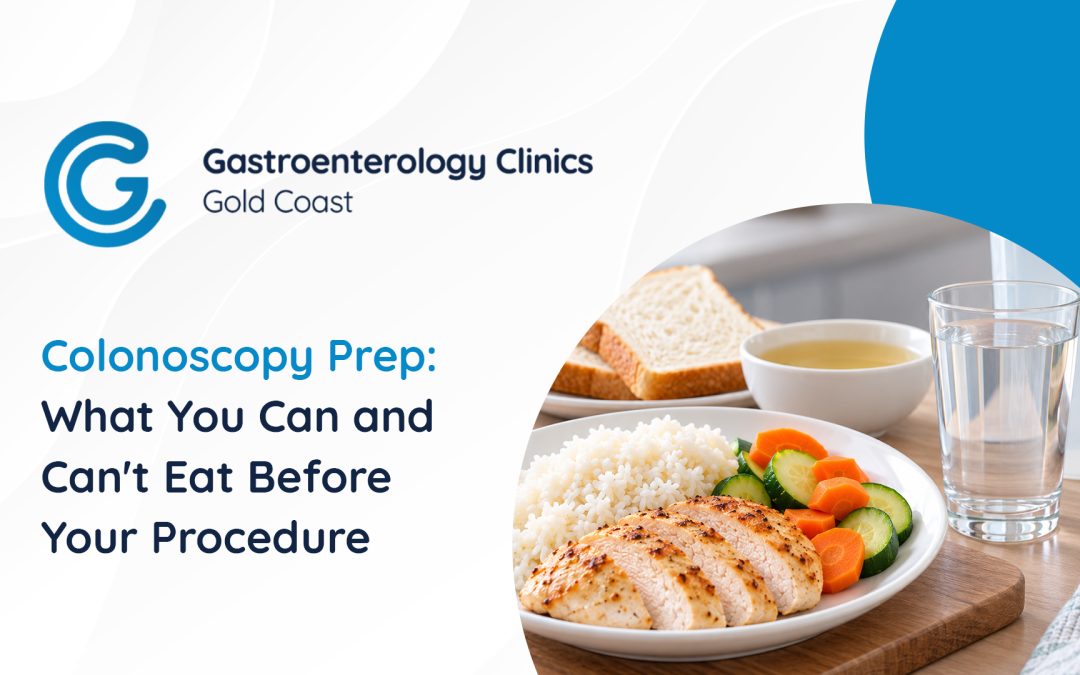
In the lead up to your procedure, a low residue diet is usually recommended. This generally
means:
● White bread, plain rice and refined pasta rather than wholegrain
● Well cooked vegetables without skin or seeds
● Plain meat, fish, chicken and eggs
● Avoiding nuts, seeds, dried fruit, wholegrains and raw vegetables
The goal is to reduce the amount of fibre and residue left in your bowel, which makes the
cleansing solution far more effective once you start it.
What Can I Eat the Day Before a Colonoscopy?
On the day before your procedure, most prep instructions move you to clear fluids only. This
typically includes clear broth, black tea or coffee, clear cordial or juice without pulp, plain jelly,
and plenty of water. Staying well hydrated on clear fluids also makes the bowel cleansing
solution more comfortable to get through, so it is worth sipping water and electrolyte solutions
(e.g. hydralyte) steadily throughout the day rather than leaving it all to the evening. The one
common catch is colour. Red and purple fluids, including some jellies and cordials, are usually
best avoided, since they can be mistaken for blood on the day of your procedure.
Taking the Bowel Prep Solution
Your specialist or their team will give you exact instructions for your particular bowel prep
solution, including when to start drinking it and over what timeframe. Sticking closely to these
instructions matters, since taking it too early, too late, or too slowly can affect how clear your
bowel is by the time of your procedure. Staying near a bathroom once you begin, and continuing
to sip clear fluids and electrolytes (e.g. hydralyte) throughout, will make the process
considerably more comfortable.
Common Colonoscopy Prep Mistakes to Avoid
A few things tend to catch people out during colonoscopy prep. Eating something off the
approved list too close to the procedure, not finishing the full bowel prep solution, and forgetting
to temporarily withhold certain medications, such as blood thinners, iron supplements or
diabetes medications (as per the clinics written instructions) are the most common issues. The
written instructions provided by our staff contain a lot of useful information so we ask that you
read those instructions carefully. If anything about your instructions is unclear, it is always worth
calling the clinic to confirm rather than guessing.
Why Preparation Matters
A well prepped bowel lets your specialist see the lining clearly and thoroughly, which matters for
spotting small polyps or areas of concern that could otherwise be missed. An underprepared
bowel can mean sections are obscured, sometimes leading to a repeat procedure down the
track, along with a second round of fasting, medication and time off work. A bit of discomfort
over one or two days is a fair trade for a colonoscopy that only needs to be done once, and for
results your specialist can actually rely on.
Book Your Colonoscopy With Our Team
If you have an upcoming colonoscopy with Gastroenterology Clinics Gold Coast (GCGC) and
want to make sure you are following the right prep for your specific procedure, our team can
walk you through exactly what to expect and answer any questions before the day.
Speak to your GP about a referral, or get in touch with our team at Gastroenterology Clinics
Gold Coast (GCGC) to find out more.
The information provided on this blog is general in nature and for educational purposes only. It
is not intended as, nor should it be considered a substitute for, professional medical advice,
diagnosis or treatment.