
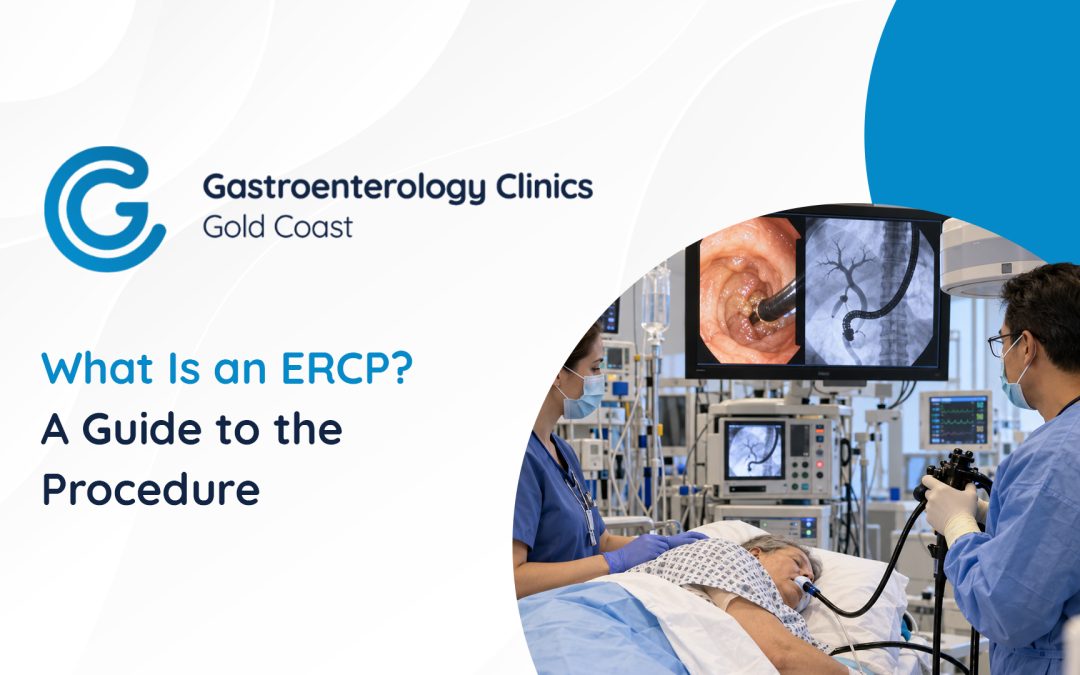
What is an ERCP? An ERCP, or endoscopic retrograde cholangiopancreatography, is a procedure that examines and often treats problems in the bile and pancreatic ducts using a combination of endoscopy and X- ray imaging.
If your GP or specialist has mentioned an ERCP operation and you are not sure what it involves, here is what it actually means for you.
What Is an ERCP and How Is It Different From a Standard Endoscopy?
A standard gastroscopy lets a specialist look at the lining of your oesophagus, stomach and the first part of your small intestine. An ERCP goes a step further. A thin, flexible tube is passed down through the mouth, stomach and into the small intestine, to the point where the bile and pancreatic ducts drain. A small amount of contrast dye is then injected into those ducts and X rays are taken, giving a clear picture of any blockages, narrowing, stones or other issues that would not show up on a regular endoscopy.
What Is ERCP Used For?
Unlike a purely diagnostic scan, an ERCP procedure can often treat the problem in the same sitting, which is part of what makes it such a useful tool. Common reasons a specialist might recommend one include:
- Removing a gallstone that has become stuck in the bile duct
- Placing a stent to relieve a blockage in the bile or pancreatic duct
- Investigating unexplained jaundice, or yellowing of the skin and eyes
- Taking a tissue sample from the bile duct or pancreas
- Treating a bile duct that has narrowed or is leaking, often following surgery
Because it can diagnose and treat in one visit, an ERCP is frequently used as an alternative to more invasive surgery for these kinds of blockages.
Is an ERCP Operation the Same as Surgery?
Not in the traditional sense. There are no external incisions involved, since the entire procedure is carried out through the mouth using the endoscope. Most patients are given sedation so they are comfortable and unaware during the procedure, and it is usually done as a day procedure rather than requiring an overnight hospital stay, though this can depend on what is found and treated along the way.
What Happens During ERCP Recovery?
ERCP recovery is generally quick compared to open surgery for the same issue. Most people feel groggy for a few hours afterwards because of the sedation, and a sore throat is common for a day or so. You will need someone to drive you home, and most people are back to normal activities within a day or two, though your specialist will let you know if your particular procedure calls for a longer recovery, especially if a stent was placed or a blockage was treated.
How Do You Prepare for an ERCP?
Preparation for an ERCP is similar to preparing for a gastroscopy. You will usually need to fast for several hours beforehand, since the procedure involves sedation and needs an empty stomach. Your specialist will also talk you through any medications that need to be paused beforehand, particularly blood thinners, since these can affect bleeding risk if a stone is removed or a stent placed during the procedure. It is worth bringing a list of your current medications and any relevant scans to your appointment, so your specialist has the full picture before you go in.
Are There Risks With an ERCP?
As with any procedure, there are some risks to be aware of, including inflammation of the pancreas, infection, bleeding or, rarely, a small tear in the bowel wall. These risks are relatively low, and your specialist will talk you through them specifically based on what your ERCP is being done for, since the risk profile can vary depending on whether the procedure is purely diagnostic or involves treatment such as stone removal or stent placement.
When Would Your Specialist Recommend an ERCP?
An ERCP is not usually a first line test. It tends to be recommended once imaging, such as an ultrasound or CT scan, has already suggested a problem in the bile or pancreatic duct, or when gallstone symptoms point to a stone that has moved out of the gallbladder and become lodged further down. If your specialist has suggested one, it is generally because a more standard test would not fully answer the question, or because treatment can be delivered at the same time as the diagnosis.
Talk to Our Team About Your ERCP
If you have been told you need an ERCP or you are simply trying to understand what one involves before your appointment, our specialists are happy to walk you through exactly what to expect for your specific situation.
Speak to your GP about a referral, or get in touch with our team to find out more about seeing one of our gastroenterologists.
The information provided on this blog is general in nature and for educational purposes only. It is not intended as, nor should it be considered a substitute for, professional medical advice, diagnosis or treatment.