
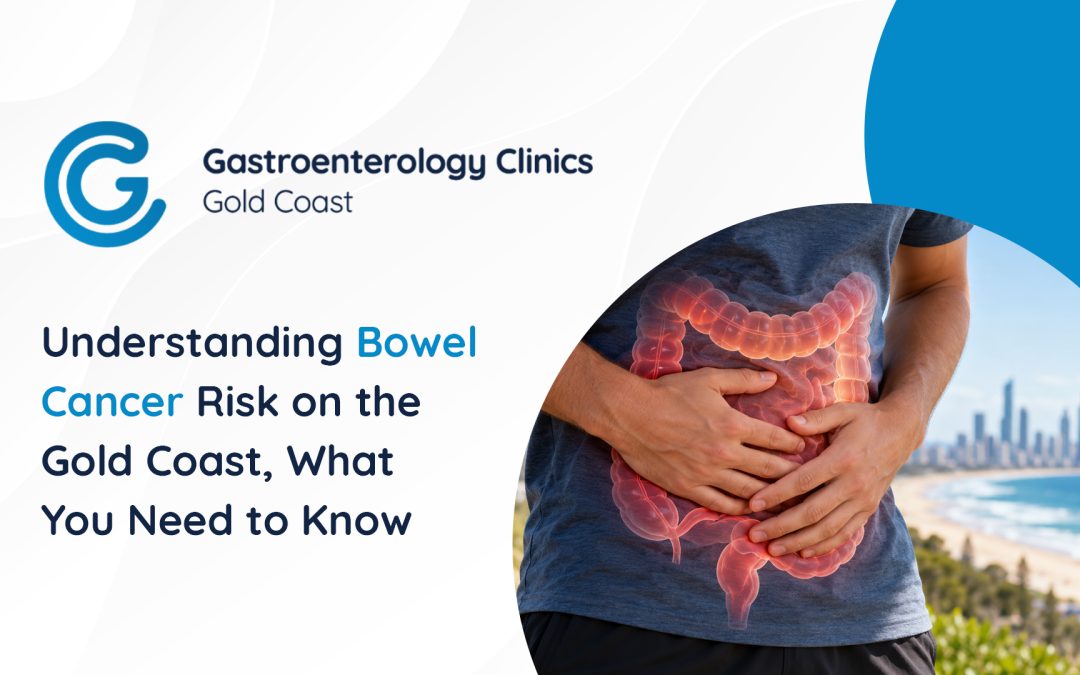
Bowel cancer also known as colorectal cancer is one of the most commonly diagnosed cancers in Australia, and the Gold Coast and Northern NSW community is no exception. According to Cancer Council Queensland, colorectal cancer remains the second most common cause of cancer-related death in Australia, with thousands of new cases diagnosed each year. The encouraging reality, however, is that when detected early, bowel cancer is highly treatable.
At Gastroenterology Clinics Gold Coast (GCGC), we work with Gold Coast and Northern NSW patients every day to identify risk factors, provide accurate diagnoses, and guide individuals through evidence-based treatment pathways. This article outlines the key risk factors associated with bowel cancer and explains why early screening is one of the most important health decisions you can make.
Who Is at Risk?
Bowel cancer can affect anyone, but certain factors can significantly increase your likelihood of developing the condition. These include:
- Age: The risk increases substantially after the age of 50, though younger individuals can also be affected.
- Family history: A first-degree relative (parent, sibling, or child) with bowel cancer or polyps increases your risk considerably.
- Personal history of polyps or inflammatory bowel disease (IBD): Conditions such as Crohn’s disease and ulcerative colitis are associated with elevated risk.
- Lifestyle factors: A diet high in processed or red meat, physical inactivity, obesity, smoking, and excessive alcohol consumption are all linked to increased risk.
- Genetic conditions: Hereditary syndromes such as Lynch syndrome and familial adenomatous polyposis (FAP) carry a significantly higher risk.
For many Gold Coasters living an active, outdoor lifestyle, it can be easy to feel reassured by general good health. However, bowel cancer often develops without any noticeable symptoms in its early stages, making routine screening critical regardless of how you feel day to day.
What are the Warning Signs?
While early bowel cancer may present with no symptoms at all, there are several signs that warrant prompt medical attention:
- A persistent change in bowel habits, including diarrhoea, constipation, or a change in stool consistency
- Rectal bleeding or blood in the stool
- Unexplained abdominal discomfort, cramping, or pain
- A feeling that the bowel has not emptied completely after a bowel motion
- Unexplained weight loss or persistent fatigue
If you are experiencing one or more of these symptoms, we encourage you to seek a consultation with one of our expert and trusted gastroenterologists rather than attributing them to other causes. Early investigation can be lifesaving.
What is the Role of Colonoscopy in Early Detection?
Colonoscopy remains the gold standard for bowel cancer screening and diagnosis. The procedure allows our specialists to examine the full length of the colon and rectum, identify the presence of polyps, and when necessary remove them to prevent cancer.
The Australian Government’s National Bowel Cancer Screening Program recommends that Australians aged 45 to 74 complete a free faecal occult blood test (FOBT) every two years. A positive FOBT result should be followed up with a colonoscopy. At Gastroenterology Clinics Gold Coast (GCGC), our Gold Coast team provides comprehensive colonoscopy services in a professional and supportive environment, with a focus on patient comfort and thorough clinical assessment.
How do I take action?
If you are over 45, have a family history of bowel cancer, or are experiencing gastrointestinal symptoms, we strongly encourage you to speak with your GP about a referral to one of our leading gastroenterologists. Early action is the single most effective strategy for improving bowel cancer outcomes.
Gastroenterology Clinics Gold Coast (GCGC) is proud to serve the Gold Coast and Northern NSW community with specialist-led gastroenterology services. Our team is committed to providing timely, caring, evidence-based care to help you protect and maintain your digestive health. Contact our rooms today to arrange a consultation.
Speak to your GP about a referral, or get in touch with our team at Gastroenterology Clinics Gold Coast (GCGC) to find out more.
The information provided on this blog is general in nature and for educational purposes only. It is not intended as, nor should it be considered a substitute for, professional medical advice, diagnosis or treatment.