
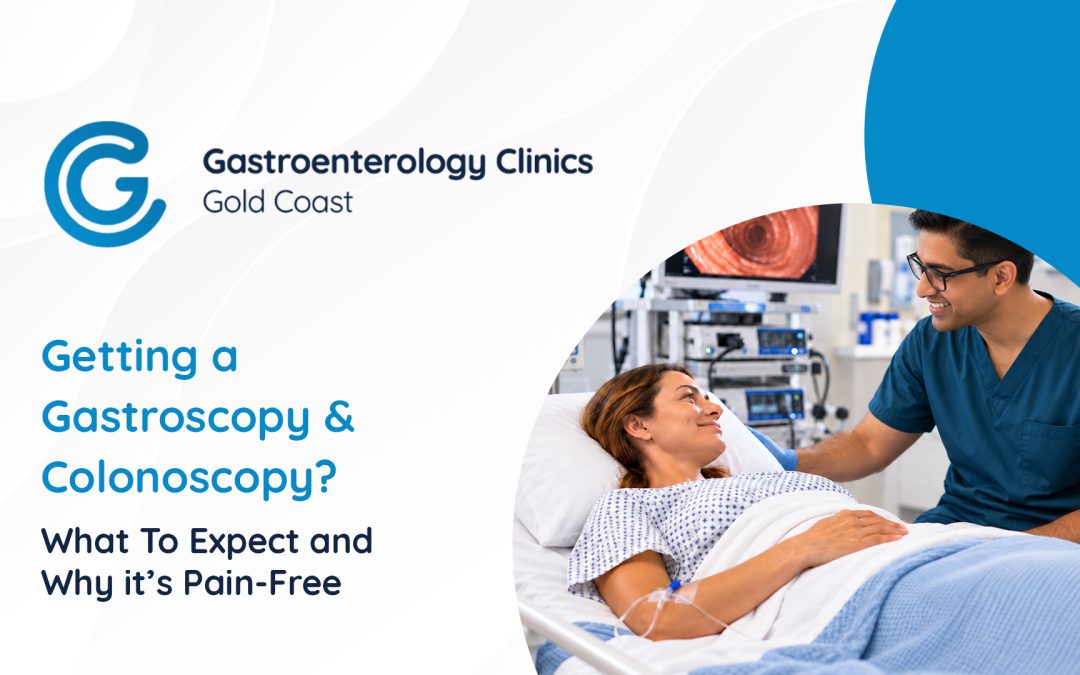
Getting a Gastroscopy & Colonoscopy? What To Expect and Why it’s Pain-Free
Medical procedures can be quite anxiety provoking and gastroscopy and colonoscopy are no different. Many people who are about to have these procedures have similar concerns about what to expect and whether the procedure will be painful. The short answer is no. A gastroscopy and colonoscopy do not hurt because you will be under a light sedation, which keeps you comfortable, relaxed and asleep.
Understanding the Procedures
While they can be performed together during the same session to give your doctor a complete view of your digestive tract, a gastroscopy and a colonoscopy look at two completely different areas.
A gastroscopy focuses on the upper digestive system. The doctor utilises a thin, flexible tube equipped with a light and a high definition camera to examine your oesophagus, stomach and duodenum (which is the start of your small bowel). This helps investigate symptoms like chronic reflux, abdominal pain, bloating or difficulty swallowing.
A colonoscopy focuses on the lower digestive tract. The specialist uses a similar flexible tube to examine the lining of your large bowel. It is the gold standard method for bowel cancer screening and tracking inflammatory bowel disease, allowing your specialist to look for, and often remove, tiny growths called polyps before they ever have a chance to turn into anything serious. A colonoscopy also helps to investigate symptoms such as rectal bleeding, abdominal pain, unexplained weight loss or a change in bowel habit.
The Infamous Bowel Prep: What to Expect Beforehand
If you ask anyone who has had a colonoscopy about their experience, they will likely tell you that the day before the procedure is the trickiest part.
For your specialist to get a perfectly clear view of your bowel lining, your system needs to be completely empty. A few days before your appointment, you will follow a low residue diet, steering clear of seeds, grains and heavy fibres. The day before the procedure, you will transition to a clear liquid diet and take a special bowel preparation kit, with details provided by the clinic.
This preparation solution triggers a thorough clean out of your bowel. While spending the evening close to your bathroom is not exactly glamorous, it is the most critical step of the entire journey. A thorough preparation means your doctor can spot even the smallest changes in the lining, ensuring a highly accurate result. For a gastroscopy, the preparation is much simpler, usually only requiring a straightforward fast for a few hours before the procedure.
What Happens on the Day of Your Procedure?
When you arrive at the hospital or day surgery, you will be welcomed by a professional medical team dedicated to making you feel secure.
Once you have changed into a hospital gown, you will meet your gastroenterologist and your anaesthetist. They will review your medical history and walk you through the steps. You will then be taken into the procedure room and asked to lie comfortably on your left side.
An intravenous line will be placed in your arm, and the anaesthetist will administer a sedative. This is not a deep general anaesthetic where you require a breathing machine. Rather, it is a conscious sedation or twilight sedation. Within moments, you will drift into a light, peaceful sleep. You will not feel any pain, you will not feel the scopes moving, and you will have no memory of the procedures when you wake up.
The gastroscopy is usually performed first, taking around ten minutes, followed by the colonoscopy, which takes about twenty to thirty minutes. If the doctor finds any polyps or needs to test for conditions like coeliac disease, they can easily take a small tissue biopsy right then and there. This is entirely painless too.
Waking Up and Recovery
When the procedures are finished, the sedative is turned off, and you will wake up gently in the recovery room. Most people wake up feeling surprisingly alert and comfortable, often asking the nurses when the procedure is going to start, only to find out it has already been completed!
Because your system is empty, the team will offer you a light meal, which usually tastes absolutely amazing after a day of fasting.
You might experience a slight sensation of bloating or wind as you wake up, which is completely normal. Doctors use a small amount of gas to gently expand the bowel during a colonoscopy so they can see clearly, and moving this gas naturally relieves any mild discomfort.
Heading Home and Next Steps
Because you have had sedation, your reflexes and judgment will be temporarily altered for the rest of the day. You must arrange for a family member, friend or responsible adult to drive you home from the hospital. You are advised not to drive a car, operate machinery or sign legal documents for twenty four hours.
Before you leave, you will receive written information about your procedure results and your specialist may also verbally discuss their findings with you. If any tissue biopsies were taken, these are sent to a pathology lab, and the detailed results are typically sent through to your referring GP within a week or two.
Taking care of your digestive health does not have to be a stressful experience. When you choose an experienced team, like Gastroenterology Clinics Gold Coast (GCGC), you are backed by a trusted and experienced team who are focused entirely on your comfort and safety.
If you are experiencing persistent digestive symptoms, delaying your check up out of fear is no longer necessary. The process is safe, smooth, straightforward and entirely pain free.
Take Control of Your Digestive Health
Do you have a current GP referral or need to discuss your gut health symptoms with a specialist? The expert team at Gastroenterology Clinics Gold Coast (GCGC) is here to guide you through every step of your medical journey with clear communication and exceptional care. Book your appointment with us today and put your mind at ease. Speak to your GP about a referral, or get in touch with our team at GCGC to find out more about seeing one of our specialists.
The information provided on this blog is general in nature and for educational purposes only. It is not intended as, nor should it be considered a substitute for, professional medical advice, diagnosis or treatment. If you are experiencing symptoms, please speak with your doctor.